


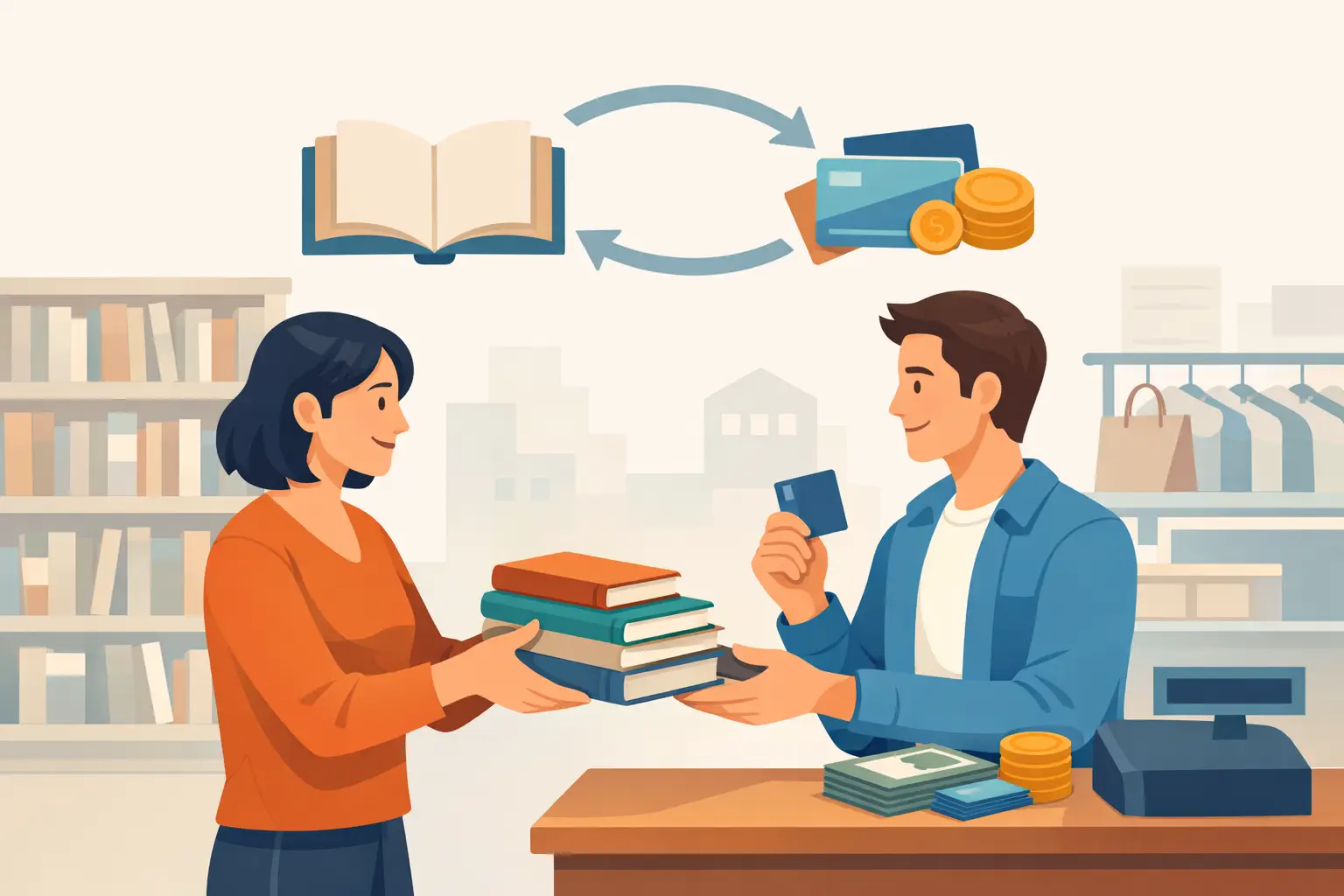
A book you enjoyed does not have to sit on a crowded shelf forever. When you know how to trade books for store credit, that finished mystery, well-loved cookbook, or stack of children’s chapter books can become your next great find. It is an easy way to clear space, keep good books in circulation, and make future browsing more affordable.
At a local used bookstore, a trade is more than a cleanup task. Your books may become reader favorites for someone else, while your credit gives you a reason to browse the shelves for hidden gems you may not have picked up otherwise. The best results come from bringing in books that are clean, complete, and likely to find another reader.
How to Trade Books for Store Credit Without Guesswork
Start by sorting your books before you load a box into the car. Stores generally evaluate trade-ins based on condition, current demand, resale value, and the titles they already have in stock. A book can be perfectly readable and still not be a strong trade candidate if the store has several copies waiting on the shelf.
That is normal, not a judgment on your reading taste. Used bookstores have limited space and work hard to keep their selection fresh. A thoughtful trade offer helps the store bring in books customers are actively looking for, while giving you credit toward discoveries of your own.
Bring your books to the counter and let a staff member look through them. Evaluation may take a little time, especially if you have a large box or several bags. Plan to browse while you wait, or ask what timing works best for a bigger trade-in. It is often easier for everyone when large collections arrive in manageable batches rather than all at once during a busy stretch.
If the store makes an offer, you can decide whether to accept it. At Liquid Books, accepted items can earn non-expiring store credit, so there is no need to rush into spending it on the same visit. Keep building credit for a larger purchase, save it for a birthday gift, or use it whenever a reader favorite catches your eye.
Start With Books That Are Ready for Another Reader
The simplest rule is this: bring books you would be comfortable buying used yourself. Check each one quickly for issues that affect whether another customer can enjoy it.
Look for clean covers, intact spines, attached pages, and readable text. Paperback books with light shelf wear can still be great trade-ins. Hardcovers may be welcome with or without dust jackets, depending on the title and condition. A little evidence of a life well read is expected in used books. Water damage, mildew odors, heavy smoke smell, loose or missing pages, and major staining are much harder to resell.
Writing inside a book is another case where it depends. A brief name on the first page may be acceptable for some titles, while extensive highlighting, answers written in workbooks, or notes throughout the text can reduce its value. Take a minute to remove old bookmarks, receipts, and personal papers before trading. That small step makes the evaluation easier and protects your privacy.
What Usually Has Better Trade Potential
Current fiction, popular mysteries, romance, fantasy, science fiction, history, biographies, cookbooks, hobby books, children’s books, and graphic novels can all be useful trade items when they are in good shape. Recent releases and recognizable authors often have stronger demand, but older books can be excellent finds too. A classic paperback, regional history title, out-of-print niche subject, or attractive illustrated edition may be exactly what another reader hopes to spot.
Condition and demand work together. A pristine copy of a book that rarely sells may bring less credit than a gently worn copy of a title people ask for every week. This is why trade values are not based on cover price alone.
Books That May Not Be a Fit
Some books are difficult for any used bookstore to take, even when they are clean. Old textbooks can become outdated quickly. Former library books, encyclopedia sets, damaged books, incomplete series, and heavily marked study guides may have limited resale potential. The same goes for titles a store already has in abundance.
Do not let that stop you from asking. A local shop’s needs change as inventory sells and customer requests come in. If a book is not accepted today, you can choose to keep it, pass it along to a friend, donate it, or recycle it responsibly if it is beyond use.
Pack Your Trade-In So It Arrives in Good Shape
A sturdy box is better than an overstuffed bag. Pack books flat or upright, but avoid leaving enough empty space for them to slide around. If you are carrying books during rain or snow, use a tote with a lid or a bag around the box. Moisture can turn an otherwise tradeable stack into a damaged one fast.
Sort your books loosely by type if you have a large collection. You do not need to create a library catalog, but keeping children’s books together, separating hardcovers from paperbacks, and setting aside collectibles can help you explain what you brought in. If there are books you definitely do not want to trade for a lower offer, keep those separate and mention it before evaluation begins.
For especially old, signed, illustrated, or unusual books, handle them with extra care. Their value may depend on details that are easy to miss, such as a first-edition statement, a complete dust jacket, or a signature. They may be better suited to a collector-focused conversation than a quick box trade.
Understand What Store Credit Is Worth to You
Store credit is not the same as cash, and that can be a good thing if you love browsing. Stores may offer more value in credit because it stays within the shop and helps keep the cycle of used books moving. You trade books you are finished with, then use the credit to bring home books, music, movies, games, or other finds you will actually enjoy.
Before you trade, think about what you want from the exchange. If your goal is simply to declutter, the convenience of one stop may matter most. If you are building a reading list, store credit can stretch your budget farther than buying every book new. Families can use it to rotate children’s books as interests and reading levels change. Collectors can save credit until the right record, DVD, or nostalgic item appears.
Because inventory changes constantly, store credit gives you permission to visit more than once. You do not have to force a purchase just to use an offer. A good used bookstore should feel like a place to return to, not a countdown clock.
Make Each Trade More Rewarding
Trade regularly instead of waiting until every shelf is overflowing. A small bag of books every few months is easier to sort, carry, and evaluate than a basement-sized cleanout. It also keeps your home collection intentional. When a new book comes in, consider whether another one is ready to move along.
Be realistic about sentimental value, too. A book can mean a lot to you without having strong resale value, and that is okay. Keep the copies that tell part of your story. Trade the ones that are ready to start someone else’s.
It also helps to ask questions at the counter. Ask whether the store is currently seeking certain genres, whether an item is better for trade or donation, and whether larger collections should be brought in at a particular time. Local staff see what customers are buying every day, and their advice can help you make smarter trade choices next time.
The real pleasure of trading books is not just the credit total. It is seeing a finished read make room for the next one, knowing useful items stay in circulation, and walking back through the door when the shelves have changed again. Bring in the books you are ready to share, then give yourself time to see what is waiting for you.
 Next Post