


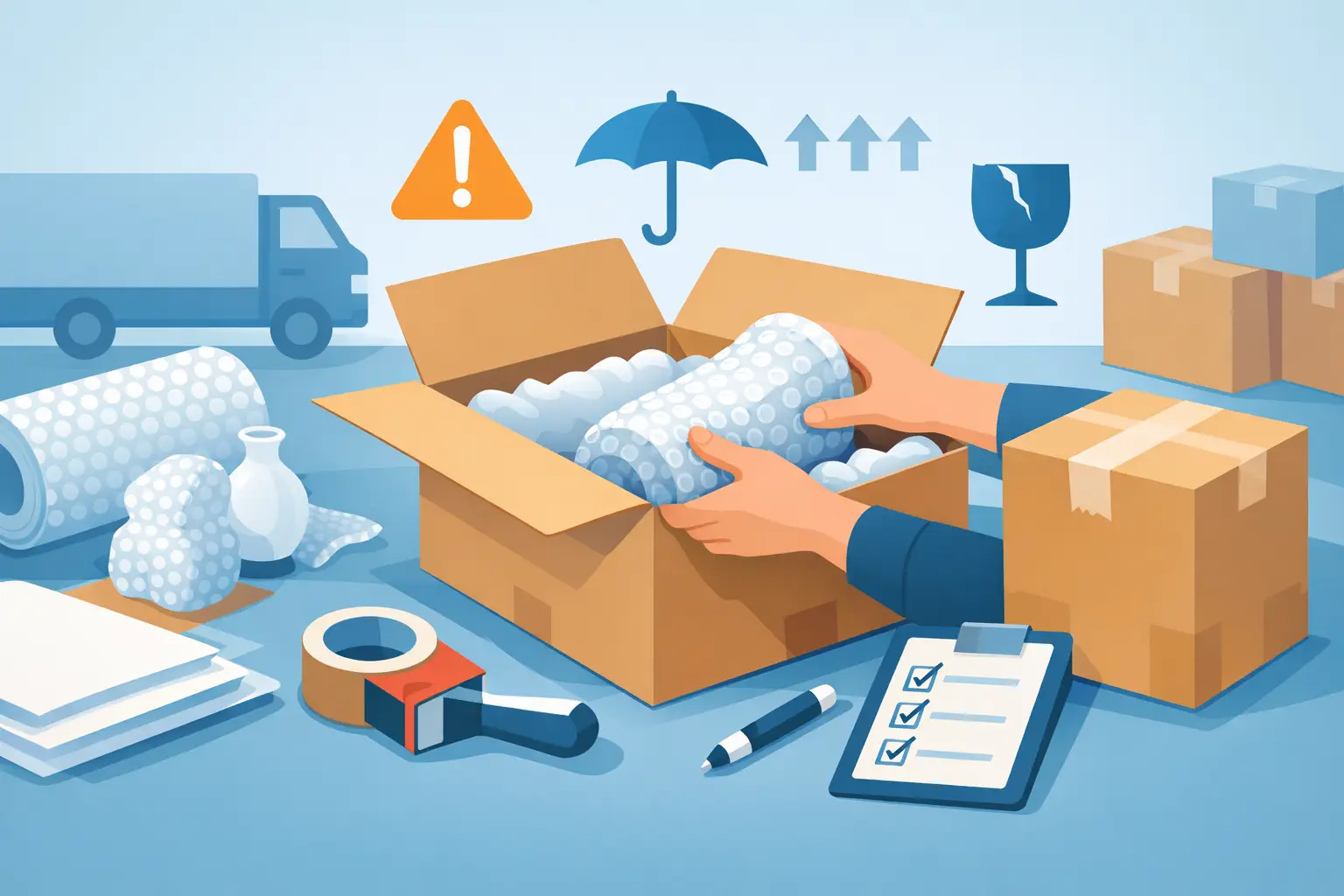
A chipped mug, cracked record sleeve, or broken family keepsake can turn a thoughtful shipment into a disappointment fast. Knowing how to pack fragile items for shipping is less about using a mountain of packing material and more about stopping movement before it starts. When the item cannot shift, collide, or touch the box walls, it has a much better chance of arriving in one piece.
Whether you are sending a gift across the state, selling a collectible online, or mailing a favorite book to a friend, a few careful choices make all the difference.
How to Pack Fragile Items for Shipping
Start by matching the box to the item. A box that is too large leaves room for the contents to build momentum during handling. A box that is too tight can press against the item and transfer every bump directly into it. Aim for a box that leaves about 2 inches of space on every side after the item is wrapped.
Use a clean, sturdy corrugated box with no soft corners, tears, old shipping labels, or water damage. Reused boxes can be a practical, eco-friendly choice for lighter shipments, but only if they are still firm and structurally sound. For heavy glass, ceramics, electronics, or collectibles, a new box is usually the safer call.
Gather your materials before you begin. You will usually need bubble wrap, packing paper, strong packing tape, scissors, and a shipping label. Depending on the item, foam sheets, cardboard inserts, air pillows, or a second box may also be worthwhile.
Wrap the item for its weak points
Every fragile item has a spot most likely to fail. A mug has a handle. A framed photo has glass and corners. A vinyl record has vulnerable edges and a cover that can crease. Find that weak point first, then give it extra protection.
Wrap the item in several layers of bubble wrap, with the bubbles facing inward for the closest cushioning against the surface. Secure the wrap with tape, but do not put tape directly on the item, especially on book jackets, labels, painted surfaces, or collectible packaging. A layer of plain packing paper or a clean plastic sleeve can protect the surface before bubble wrap goes on.
For glassware, fill any hollow space first. A vase, cup, or bowl should have crumpled paper inside so it will not collapse under pressure. Wrap handles and stems separately before wrapping the whole piece. Plates and flat glass items should be packed vertically rather than stacked flat whenever possible. Their edges are generally better at handling pressure than their broad surfaces.
Books, DVDs, CDs, and records need protection too, even if they do not look as delicate as glass. A hardcover book can arrive with crushed corners or a bent spine if it slides around. Wrap books in paper or a plastic sleeve, add a layer of bubble wrap, and use stiff cardboard around the outside. For vinyl, use a properly sized record mailer or sturdy cardboard panels, with the record and jacket protected from rubbing against one another.
Build a Cushioning Zone Inside the Box
Put a base layer of cushioning in the bottom of the box before the wrapped item goes in. About 2 inches is a good starting point for most fragile shipments. Crumpled packing paper works well because it fills uneven spaces and holds its shape better than loosely tossed-in scraps.
Place the wrapped item in the center, never directly against a side, corner, top, or bottom of the box. Then fill all open space around it. The goal is not simply to make the box look full. The goal is to create a firm cushion that keeps the item centered from every direction.
A good test is simple: close the box without taping it and gently shake it. If you hear movement or feel the contents shift, add more filler. Do not rely on one large wad of paper in the corners. Fill the gaps evenly, including above the item, so it cannot rise and strike the top of the box.
These materials each have a useful role:
- Bubble wrap cushions delicate surfaces and absorbs shocks.
- Crumpled packing paper fills gaps and prevents shifting.
- Foam sheets protect polished, painted, or easily scratched surfaces.
- Cardboard inserts separate multiple items and reinforce flat pieces.
- Air pillows fill larger voids around lighter items, but should not be the only protection for heavy objects.
Avoid using newspaper directly against items that can be stained or damaged by ink. Towels and clothing can work for personal shipments in a pinch, but they compress more than purpose-made packing material. For a valuable collectible or breakable gift, use materials that will stay firm through the trip.
When Double Boxing Is Worth It
Double boxing adds another layer of protection by placing one packed box inside a larger box with cushioning between them. It takes more material and may increase shipping cost, but it is often the right choice for particularly fragile, valuable, heavy, or sentimental items.
First, pack the item securely in an inner box. Then place that sealed inner box in a larger outer box, leaving at least 2 inches of cushioning on all sides. This method is especially helpful for ceramics, framed art, electronics, delicate antiques, and glass items with awkward shapes.
Do not double box just to compensate for loose packing. If the item can move inside the inner box, the outer box will not solve the problem. Each box needs to be packed properly on its own.
Seal the Package Like It Will Be Stacked
Packages can be carried, sorted, slid, and stacked with other boxes. Seal yours with that reality in mind. Use strong packing tape, not masking tape, painter’s tape, string, or twine. Apply tape across the center seam and along both edge seams on the top and bottom, creating an H-shaped seal.
Reinforce the bottom of a heavy package with additional tape. If the box is carrying multiple fragile items, use cardboard dividers or wrap each piece separately so they cannot touch one another. Two mugs packed together without separation can chip each other even when the outside box looks perfectly protected.
Write or apply the full delivery and return addresses clearly. A “Fragile” label can encourage careful handling, but it is not a substitute for proper packing. Think of the label as a reminder, not a force field. Your packaging should still protect the item if the box is turned sideways or has another package placed on top of it.
Pack With the Shipping Distance in Mind
A small item traveling locally may need less protection than one crossing several states, but distance is only one factor. Weather, package weight, box size, carrier handling, and the value of the item all matter. A fragile item shipped during wet or snowy weather may benefit from an inner plastic bag to guard against moisture, while heat-sensitive media and wax items need extra care during hot weather.
For a high-value collectible, take a few photos before sealing the box. Photograph the item, its condition, and the packed interior. This is useful for your own records and can help if you ever need to discuss a damage claim. Consider shipment protection or insurance when the item’s value would be difficult to replace.
If you are unsure whether a box, mailer, or cushioning material is right for your item, ask before sending it. At Liquid Books, packing and shipping support is part of making a neighborhood errand feel a little easier, whether you are mailing a book, a collectible, or something that matters to someone far away.
Before you hand over the package, give it one final shake test and check every taped seam. A few extra minutes at the counter or kitchen table can protect the story, memory, or hidden gem inside long after it leaves your hands.
 Previous Post
 Next Post