


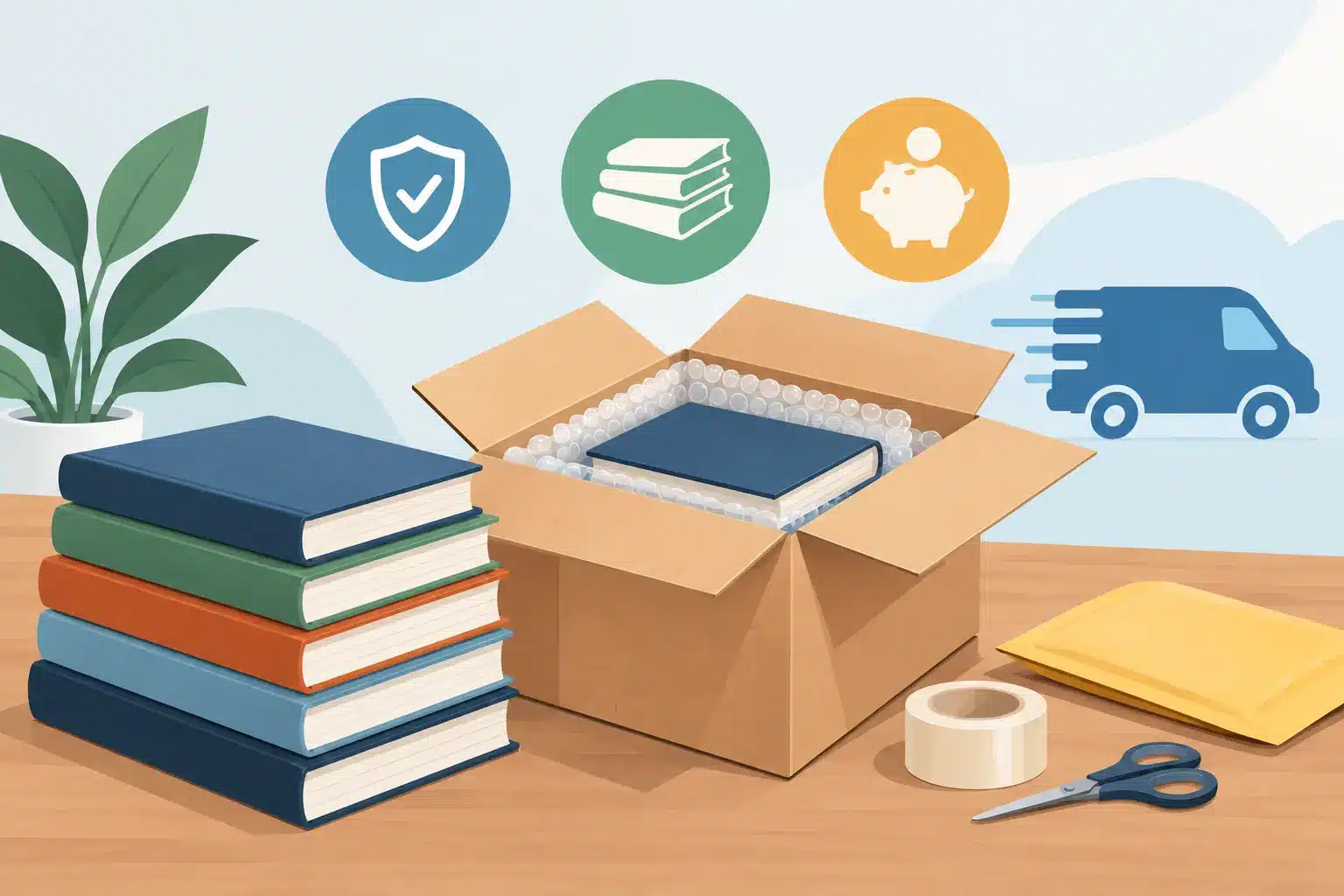
A book can look perfectly fine when it leaves your hands and still arrive with bent corners, a damp cover, or a split spine. The good news is that you can ship books safely without turning every package into an expensive, overpacked brick. A little protection in the right places makes a big difference, whether you are mailing one paperback to a friend, selling a collectible online, or sending a box of textbooks to a student.
Books are sturdy until they meet moisture, loose space, or a hard hit on the edge of a box. Pack for those risks first. Then choose a shipping option that matches the book’s value, weight, and destination.
Start With the Book’s Condition
Before you pack, take a quick look at the book as it is now. Check the corners, dust jacket, binding, and pages. If you are selling or trading a used book, this also gives you a clear record of its condition before it leaves.
For a standard reading copy, a snug layer of protection is usually enough. A first edition, signed title, rare comic collection, vintage magazine, or book with a fragile dust jacket deserves more care. The goal is not to use the most material possible. It is to prevent rubbing, bending, and movement during the trip.
If the book has a dust jacket, place it in a clear protective sleeve or wrap it in clean paper before adding other packing material. Avoid taping anything directly to a cover or jacket. Tape can pull off finish, leave residue, or damage older paper when removed.
Moisture is the quiet troublemaker. Even a short walk from a delivery truck to a porch can expose a package to rain or snow. Put the book in a clean plastic bag, resealable sleeve, or other water-resistant inner layer before it goes into a mailer or box. This is especially worthwhile for books headed long distances or during wet weather.
How to Ship Books Safely in a Mailer or Box
The best container depends on the book and how far it is traveling. A sturdy cardboard book mailer works well for many single paperbacks and hardcovers. It folds around the book, keeps the package compact, and offers better edge protection than a soft envelope.
Padded envelopes can work for an inexpensive paperback in good condition, but they are not the best choice for a heavy hardcover or anything collectible. Bubble padding helps with light bumps, yet it does little to protect a book from being crushed or bent. If you can feel the book’s corners pressing against the outside, choose a stronger mailer or a small box.
For hardcovers, multiple books, or higher-value items, use a clean, rigid box. Pick one that is only a little larger than the books. A box that is too large invites movement, while a box that is too tight can put pressure on corners and bindings.
Wrap the book in paper, bubble wrap, or a thin layer of protective cushioning. Add cardboard sheets on the front and back if the cover needs extra support. Place the wrapped book in the box, then fill any open space with crumpled paper, kraft paper, or other lightweight cushioning. When you gently shake the closed box, nothing inside should shift.
Pay attention to the book’s edges. Corners and spine ends are the first places to show damage, especially when a package is dropped. Cardboard corner protectors are useful for special books, but two fitted pieces of scrap cardboard can also provide a simple protective layer. Reusing clean packing materials is a practical, eco-friendly option, as long as they are dry and still have enough structure to do the job.
Pack Multiple Books So They Do Not Rub
Sending several books together is convenient, but weight adds up quickly. A large box packed with books can become difficult to lift and more likely to break if the bottom is weak. It is often smarter to use two manageable boxes than one oversized carton.
Keep books flat when possible, with the largest and heaviest titles on the bottom. Separate books with cardboard or paper so glossy covers, dust jackets, and delicate bindings do not rub against each other. Do not force books into a box until covers bow or pages compress. That kind of pressure can leave permanent warping.
For a mixed stack, place similarly sized books together. A thick hardcover next to a slim paperback can create an uneven surface that shifts under pressure. Fill gaps firmly but gently, particularly along the sides and at the top of the box.
Once packed, reinforce the bottom seam of a heavier box with packing tape. Use tape designed for shipping, not masking tape, painter’s tape, or string. Run tape across the center seam and along the side seams for added support. Close the top the same way.
Choose Shipping Based on Value, Weight, and Speed
The least expensive service is not always the right one, but neither is the fastest option. For a low-cost used paperback, an economical book-rate service may make sense when timing is flexible. For a gift, a textbook needed by a deadline, or a collectible purchase, tracking and a more predictable delivery window may be worth the extra cost.
Consider three questions before buying postage: How heavy is the package? How soon does it need to arrive? What would it cost to replace the book if it were lost or damaged? Your answer helps determine whether tracking, insurance, signature confirmation, or faster service is a sensible choice.
Insurance is most useful when the package contains a higher-value book and you can document its condition and value. It is not a substitute for careful packing. Carriers may deny a damage claim if the item was packed poorly, so keep your receipt, take a few photos before sealing the package, and save any relevant sale records.
Address labels should be clear, complete, and firmly attached to a flat surface. Include apartment numbers, business names, or other details that help the package reach the right door. If you are reusing a box, remove or fully cover old labels and barcodes. A leftover barcode can send a perfectly packed book on an unnecessary detour.
Common Book-Shipping Mistakes to Skip
Most shipping damage comes from a handful of avoidable shortcuts. The biggest mistake is mailing a book with no moisture barrier. Paper absorbs water quickly, and once pages swell or wrinkle, the damage is hard to reverse.
Another common issue is leaving empty space in a box. Loose books slide, slam into walls, and arrive with damaged corners. Use enough filler that the contents stay still, but do not pack so tightly that the box bulges.
Avoid wrapping books in newspaper if the ink could transfer to a light-colored dust jacket or cover. Clean packing paper is the safer choice. Also, do not rely on a label that says “Fragile.” It may encourage care, but it cannot replace a rigid container and good cushioning.
Finally, weigh and measure the finished package, not just the books. A box, tape, and padding can change the price tier. Knowing the final dimensions before you ship helps prevent surprises at the counter.
Get Local Help When the Package Matters
Some packages are easy to handle at home. Others deserve a second set of eyes, especially if you are shipping a stack of books, an out-of-print favorite, or a collectible you would hate to see damaged. Bringing the item to a local shipping center lets you compare packaging options, confirm the weight, and choose a service without guessing.
At Liquid Books, book lovers understand that a well-packed package is part of passing a good find along to its next reader. Whether you need a single mailer, a sturdy box, or help getting a shipment ready, a little hands-on support can save time and protect the item inside.
The next time a book is headed across town or across the country, give it a dry inner layer, firm edges, and a box that fits. That small bit of care helps ensure the only surprises waiting at delivery are the ones inside the story.
 Previous Post
 Next Post