


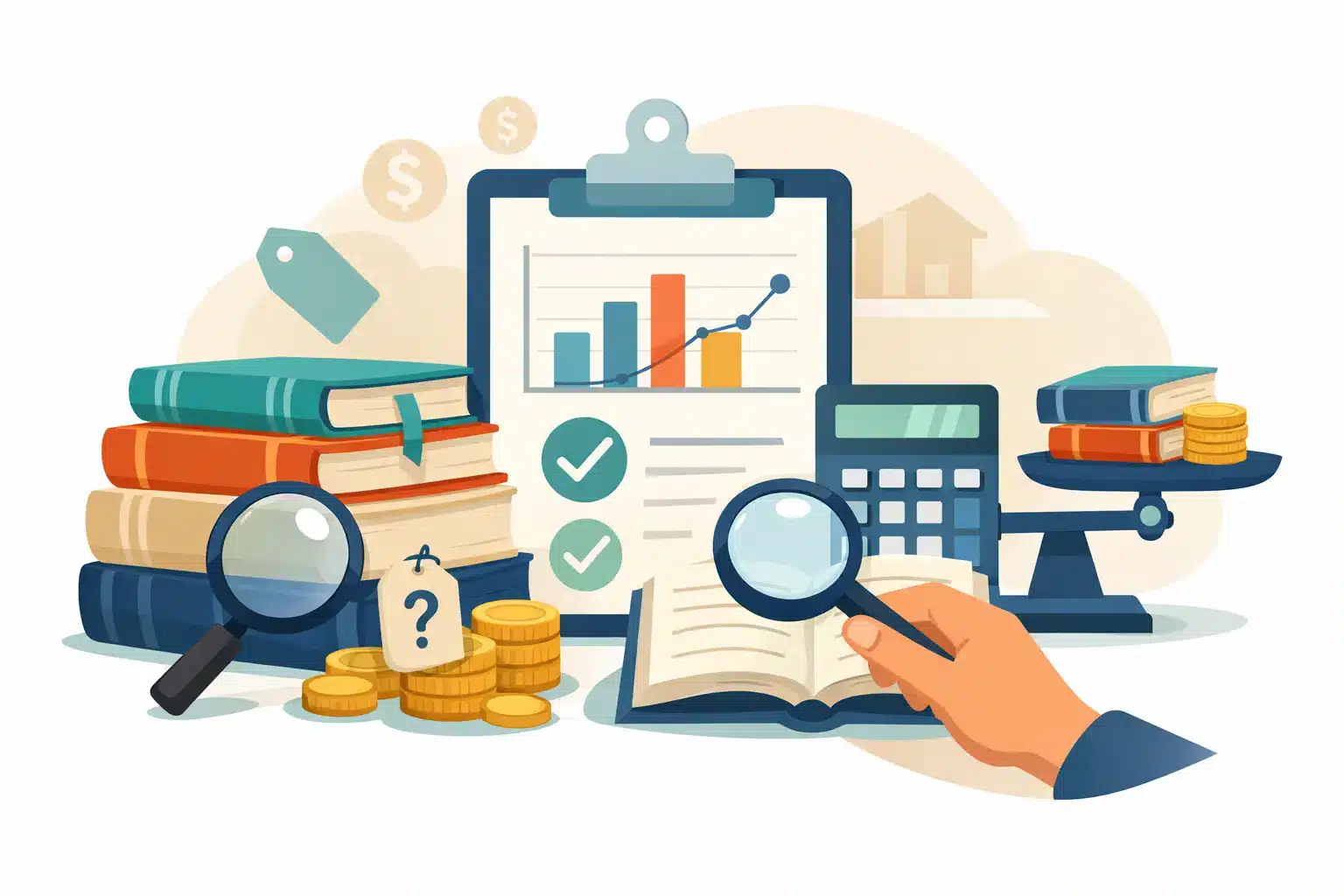
A stack of books can look like a quick cleanout until you find one with a signed page, an unusual cover, or a title that is suddenly popular again. Knowing how to price used books means separating everyday reading copies from the finds that deserve a second look – without spending hours researching every paperback.
The goal is not to attach the highest possible price to each book. It is to set a fair price that reflects what the book is, what shape it is in, and whether another reader is likely to want it. A book priced well gets another life on someone else’s shelf. A book priced too high often stays put, even if it is technically collectible.
How to Price Used Books: Start With the Book in Hand
Before checking online listings or comparing prices, identify exactly what you have. The title and author are only the beginning. Look at the copyright page for the publisher, publication date, edition statement, ISBN, and printing information. Two copies with the same cover can have very different resale value if one is a first edition or an earlier printing.
Then assess condition honestly. Used books do not need to look new to be worth buying, but condition strongly affects price. Check the binding, cover corners, spine, pages, dust jacket, highlighting, stains, odors, water damage, and any missing pages. A clean, solid reading copy has value. A heavily worn copy may still be useful, especially for a popular title, but it should be priced accordingly.
For most everyday books, condition and demand matter more than age. A 1990s hardcover is not automatically rare, and an old paperback is not automatically valuable. Plenty of books are old; far fewer are scarce, desirable, and in good condition at the same time.
Know the Difference Between Retail Value and Trade Value
One of the most common pricing mix-ups happens when people compare a store’s shelf price to a trade-in offer. They are not the same number, and they should not be.
Retail value is what a shop may charge after sorting, cleaning, shelving, storing, and selling a book. Trade value is what the shop can reasonably offer while taking on the risk that the book may sit for months or may not sell at all. Store credit can often be a great option for readers because it turns finished books into future discoveries, but the amount offered will still reflect resale demand and condition.
If you are pricing books for a yard sale, classroom fundraiser, online listing, or personal collection, think like a buyer. Would someone nearby feel good about paying that price today? A book that sells quickly at $4 may be a better result than one marked $12 that never leaves the table.
Check Demand, Not Just the Lowest or Highest Listing
Online marketplace searches can be useful, but they can also be misleading. A seller can list a common book for $75 without ever finding a buyer. The asking price is not proof of value.
Search for copies that match your book as closely as possible: same edition, format, publisher, and condition. Pay attention to completed or sold prices when available, not just active listings. Also factor in shipping costs. A book listed for one cent plus shipping does not establish that the book has meaningful local shelf value.
Demand is often easy to spot in a bookstore. Reader favorites, current book-club selections, well-known mysteries, fantasy series, romance, children’s books, regional history, cookbooks, and books tied to a movie or television adaptation may move quickly when they are clean and reasonably priced. A niche academic book may be more specialized, but it can still have value if it is current, useful, and hard to replace.
Local demand matters, too. A practical guide for Midwest gardening, a Kankakee County history title, or a popular school reading selection may be more appealing to nearby buyers than a national online price suggests.
Watch for Details That Can Raise the Price
Most used books belong in an accessible everyday price range. A smaller group deserves more research because specific details can change the value significantly.
Look more closely when you find these features:
- A true first edition or early printing, especially from a sought-after author
- A signed, inscribed, or association copy with a verifiable connection to the author or subject
- A complete dust jacket in very good condition on a collectible hardcover
- A limited edition, fine press edition, unusual binding, or numbered copy
- A scarce local history, out-of-print reference work, vintage children’s book, or collectible series volume
These clues are not automatic jackpots. A signed copy by an author with little collector interest may still be a modestly priced book. Likewise, a first edition without the correct points, jacket, or condition may not command a premium. When in doubt, slow down and compare carefully rather than guessing from one exciting detail.
Set a Price That Matches Condition
Condition descriptions help buyers trust what they are getting. You do not need auction-house language to be clear. Plain descriptions work well: like new, very good, good reading copy, or acceptable with wear.
A clean copy with a tight binding and no writing can sit near the top of your chosen price range. Light shelf wear, a price sticker, or a gently creased spine might call for a modest reduction. Heavy notes, loose pages, water rippling, smoke odor, mildew, or damaged covers usually push a book into low-cost reading-copy territory – if it is saleable at all.
Be especially careful with dust jackets. For collectible hardcovers, the jacket can represent a meaningful portion of the value. For ordinary books, it still affects how attractive the copy looks on a shelf. A torn or missing jacket should be reflected in the price rather than hidden in the description.
Use Simple Price Tiers for Everyday Books
Trying to create a unique strategy for every common paperback can turn pricing into a chore. Price tiers make sense for books that are not rare but still deserve a good home. For example, you might group clean mass-market paperbacks at one price, standard trade paperbacks at another, and recent hardcovers at a higher level.
This approach keeps browsing easy for customers and helps your inventory feel consistent. It also leaves room for exceptions. A thick, current hardcover in excellent condition may deserve more than an older bestseller, while a worn paperback from a popular series may be priced low because it is likely to move quickly.
A useful rule is to price for turnover when you have multiple copies of common titles. Shelves become more interesting when books keep moving and new books are added regularly. Holding out for an extra dollar or two on a book with dozens of similar copies may not be worth the space it occupies.
Avoid the Pricing Traps That Leave Books Sitting
Sentimental value is real, but it is personal. A book you loved, inherited, or paid full price for may not have the same market value now. Let the book’s condition, edition, and buyer demand guide the price instead.
Avoid treating every hardcover as a collectible, every old book as rare, or every out-of-print title as valuable. Out of print only means the publisher is not currently producing that edition. Some out-of-print books are hard to find; many are simply no longer in demand.
It also helps to avoid pricing from a single source. Compare several similar copies, account for condition, and consider where you are selling. An online collector may pay differently than a reader browsing a neighborhood shop for a weekend read.
When to Ask for Help With a Potential Find
Set aside books that seem unusual instead of pricing them quickly. Signed copies, older books with original jackets, small-press publications, military histories, local-interest titles, art books, and books with complicated edition information are all worth a closer look.
Photos of the cover, copyright page, binding, signature, and any condition issues make research much easier. If you are bringing books in for trade, keep special items separate and point them out. At Liquid Books, a careful look at the details helps make sure a possible hidden gem does not get treated like an ordinary shelf copy.
The best used-book price is one that respects the book, fits its condition, and gives the next reader a reason to take it home. Start with the facts, leave room for common sense, and let great books keep circulating through the community.
 Previous Post
 Next Post