


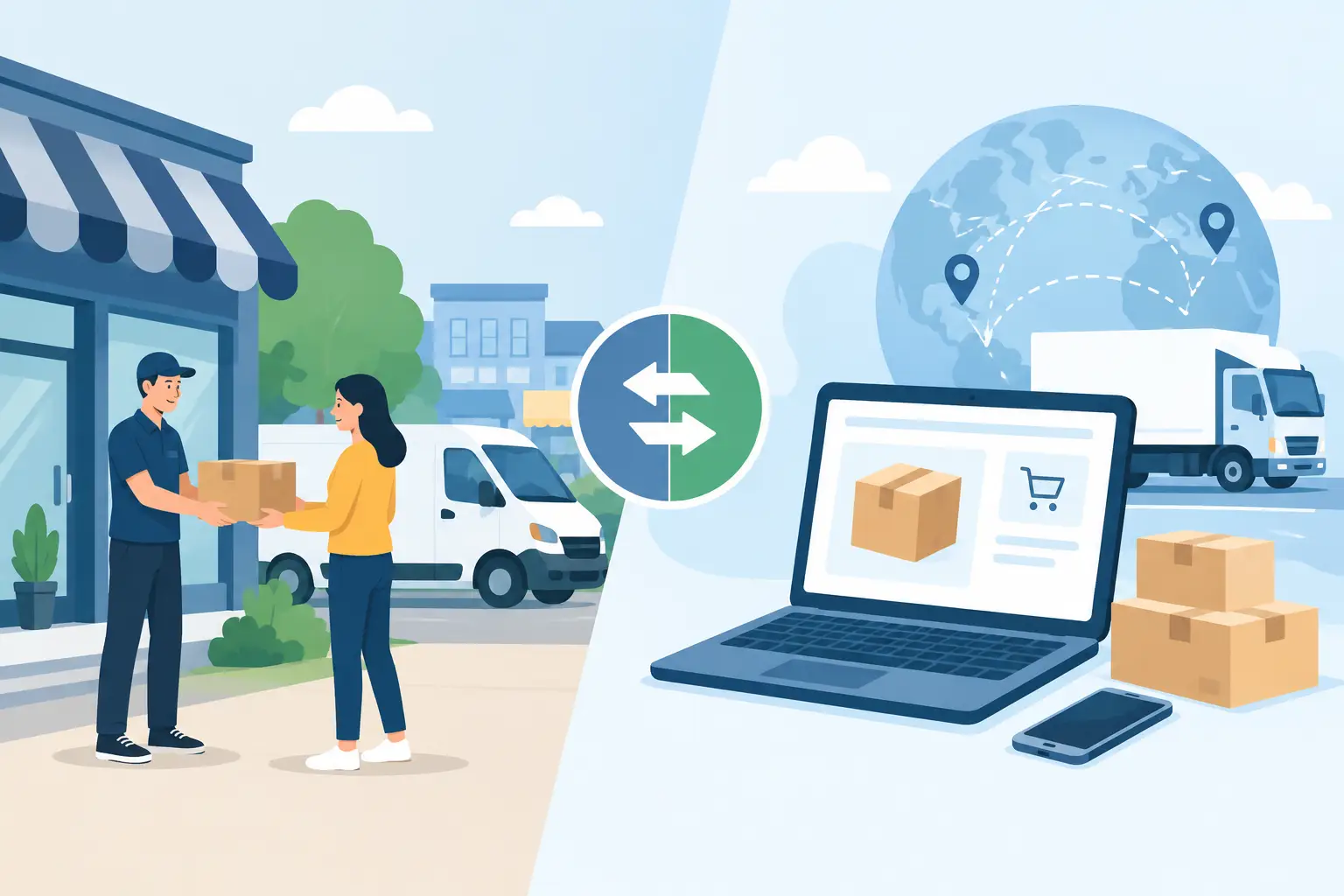
A birthday gift has to arrive intact. A sold collectible needs the right box. A stack of business paperwork cannot sit on the kitchen counter for another week. Those are the moments when local shipping versus online shipping becomes more than a checkout choice. It becomes a question of how much time, confidence, and hands-on help you need before a package leaves town.
Online shipping can be fast and convenient, especially when you already know the carrier, package dimensions, and service level you need. A local shipping center adds something a screen cannot: a real person who can look at the item, help protect it, and answer the practical questions that tend to show up halfway through the process.
Local Shipping Versus Online Shipping: The Real Difference
The biggest difference is not simply where you buy a label. It is how much of the shipping job you are doing yourself.
With online shipping, you generally measure the package, select a carrier and service, print the label, pack the item, and arrange a drop-off or pickup. That can work beautifully for routine shipments, such as sending the same sized product to customers every week or mailing a document in a standard envelope.
Local shipping is often a better fit when the package is unfamiliar, fragile, oversized, valuable, or time-sensitive. You can bring in the item and get help choosing packaging and shipping options based on what is actually in front of you. For a first-time shipper, a busy parent, or a small-business owner juggling ten other tasks, that support can be worth far more than a few minutes saved online.
Neither option wins every time. The right choice depends on the item, the destination, your schedule, and how comfortable you are handling the details.
When Online Shipping Makes Sense
Online shipping earns its place for predictable, repeatable tasks. If you sell books, records, or other goods online and regularly send similar packages, saved address information and preset package sizes can speed up your workflow. You can compare services at your desk, print labels in batches, and prepare shipments outside regular store hours.
It can also be useful when you have already packed the item correctly and only need a label. If your package is straightforward, you may know exactly which service you want and prefer to handle it without a stop in town.
The trade-off is that online tools assume you have the supplies, equipment, and know-how to finish the job. A scale, printer, tape, labels, boxes, cushioning material, and a reliable measurement can all matter. If the weight or dimensions are entered incorrectly, the final cost may change. If an item is packed too loosely, shipping it quickly does not make it safer.
Online shipping also tends to feel less convenient when something goes wrong. Questions about an odd-shaped item, an international form, a return label, or a delivery delay can turn a simple transaction into a customer-service search. For regular shippers, that may be manageable. For occasional shippers, it can be a frustrating use of an evening.
Why Local Shipping Can Save More Than Time
A local shipping center is especially useful when you need judgment, not just postage. Someone can help you decide whether a used book needs a padded mailer or a box, whether a collectible should be double-boxed, or whether extra cushioning is a smart precaution. That kind of advice helps protect the item and can prevent the disappointment of an arrival that looks like it lost a fight with the sorting equipment.
Packing help matters because shipping costs are only one part of the equation. A cheaper service is not a bargain if a fragile item arrives damaged. Likewise, buying a box that is far too large can mean paying for empty space while giving the contents room to shift around. Good packing is about matching the materials to the item.
There is also value in being able to ask a question out loud. You may need to know the difference between delivery speeds, how tracking works, what paperwork is required, or which option is best for a package headed across the country. Face-to-face help can make the process feel less like a gamble.
At Liquid Books, shipping support sits alongside printing, faxing, and other practical services because errands rarely arrive one at a time. You might print a return document, pack a package, send a fax, and browse for a reader favorite before heading home. That is neighborhood convenience with a little more personality than a checkout screen.
Cost Is More Than the Label Price
People often compare local and online shipping by looking only at the advertised label price. That is understandable, but it misses the full cost of shipping.
Online shipping may offer a lower rate in some situations, particularly for customers who ship often and have a streamlined setup. But consider the supplies you need to buy, the printer ink you use, the trip required to drop off the package, and the time spent fixing mistakes. If you are mailing one package every few months, keeping a shelf stocked with boxes and packing material may not be much of a savings.
Local shipping can be especially practical when you need to purchase supplies one package at a time or want guidance before choosing a service. You are paying for more than a label. You are getting access to materials, experience, and a place designed to handle the task.
Price also depends on size, weight, distance, and speed. A small, sturdy package traveling nearby may have very different options than a large box heading to the West Coast. Ask about choices rather than assuming the fastest or most familiar service is automatically the best fit.
The Best Choice for Common Shipping Situations
For simple returns, online shipping can be ideal if the seller has provided a prepaid label and your item is already packed. Print it, attach it securely, and use the requested drop-off method. If you do not have a printer or need a box, local help removes those extra hurdles.
For gifts, local shipping is often reassuring. You want the item to arrive looking thoughtful, not rattling around in a reused box with too much empty space. Bring it in early, especially around holidays, and choose a service that leaves room for weather, weekends, and heavy seasonal volume.
For collectibles, records, vintage media, electronics, and sentimental items, packing deserves extra attention. These items may be irreplaceable or difficult to find again. Online shipping can work if you know the correct packing method, but local assistance is a smart choice if you are uncertain about box strength, padding, or insurance options.
For small businesses, the answer may be a mix. Routine shipments can be prepared online for efficiency, while unusual orders, higher-value products, and last-minute needs can be handled locally. The goal is not to pick one method forever. It is to build a shipping routine that keeps your customers happy without creating extra work for you.
A Better Way to Decide Before You Ship
Start with the item itself. Is it fragile, heavy, oddly shaped, valuable, or difficult to replace? If yes, give packing the attention it deserves and consider local help. Then think about timing. If you need a label after hours and the shipment is routine, online shipping may be the easy answer. If you have questions, need supplies, or want another set of eyes on the package, a local shipping center can be the calmer choice.
Finally, do not wait until the last possible day. Shipping estimates are estimates, and weather, holidays, and carrier volume can affect delivery. Building in a little extra time gives you more service options and less reason to stress over tracking updates.
A package is often carrying more than an item. It may hold a gift, a sale, a memory, or the next step in someone else’s project. Choose the shipping method that gives that package the care it deserves.
 Previous Post
 Next Post