


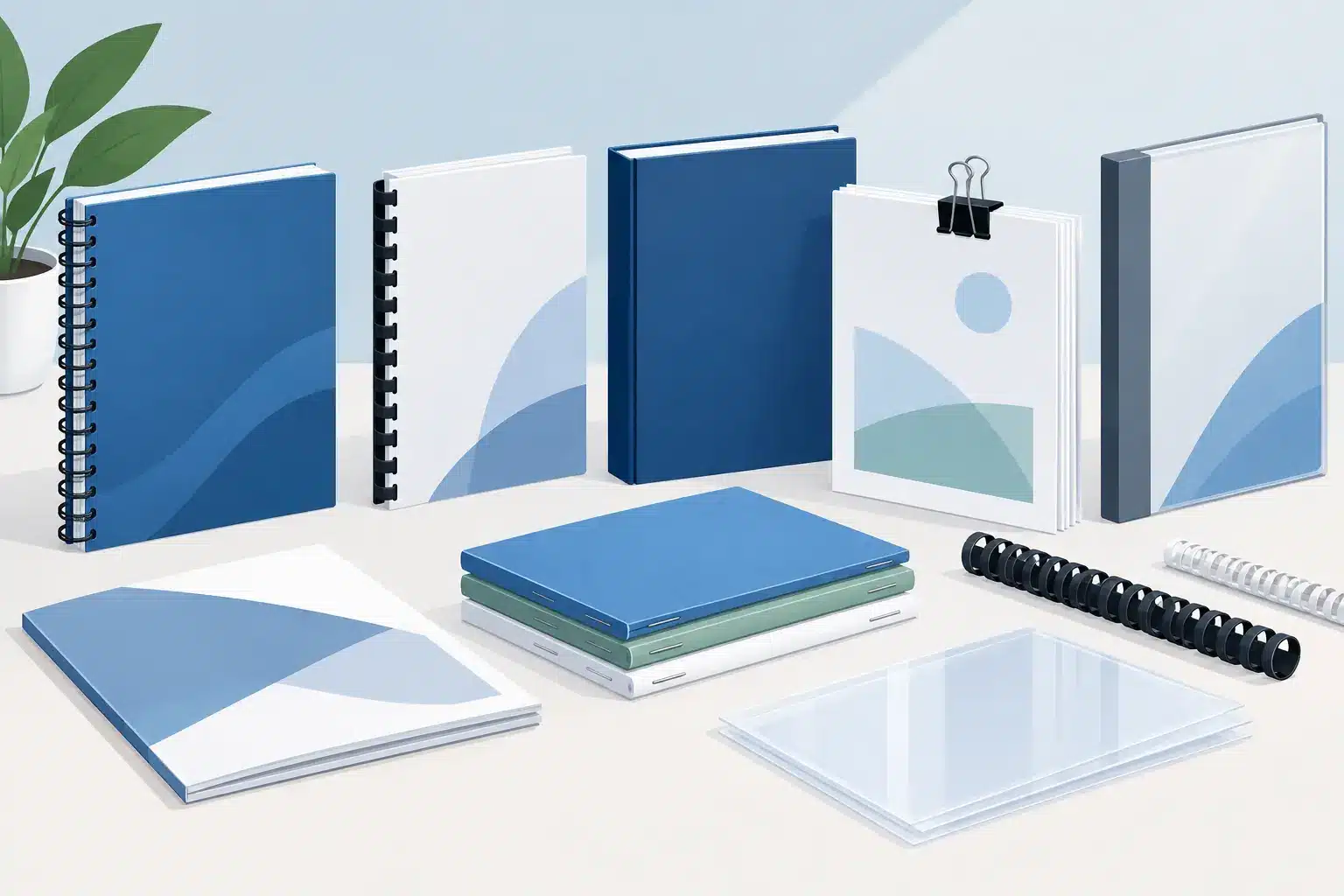
A stack of loose pages can make a thoughtful report, a family recipe collection, or a new employee handbook feel unfinished. The best document binding options give pages a purpose: they keep work together, make it easier to read, and help a project hold up after it leaves the print counter.
The right choice is not always the fanciest one. A classroom packet needs to be affordable and easy to replace. A presentation may need to lie flat on a conference table. A keepsake cookbook should be sturdy enough for years of kitchen use. Start with how the document will be used, then choose a binding that fits the job.
Start With the Pages, Not the Binding
Before choosing a finish, look at the page count, paper weight, and how often people will handle the document. A 10-page black-and-white handout has very different needs than a 150-page training manual printed on heavier stock.
Also consider whether readers need the pages to lie flat, fold fully backward, or open to one specific spread. Recipes, instruction manuals, music sheets, and workbooks are easier to use when they stay open. Reports and proposals, on the other hand, often benefit more from a clean, professional edge.
Covers matter, too. A clear front cover can protect a title page while keeping it visible. Cardstock adds color and structure. A heavier back cover helps a document stay neat in a backpack, briefcase, or desk drawer. These small choices can make a simple project feel deliberate without pushing it into overdone territory.
Best Document Binding Options by Project Type
Stapled booklets for short, simple jobs
Stapling is the practical choice for smaller documents, especially when speed and budget matter. It works well for event programs, church bulletins, classroom packets, price lists, short newsletters, and handouts that will be read once or twice.
Corner stapling is the quickest route for a modest stack of pages. Booklet stapling, sometimes called saddle stitching, places staples along a folded center crease. That creates a real booklet shape and works best when page counts are planned in multiples of four.
The trade-off is capacity. Staples are not a good fit for thick manuals, and pages do not fold back on themselves cleanly. Still, for a compact project with a short lifespan, they are tough to beat.
Plastic comb binding for editable manuals
Plastic comb binding uses a flexible plastic spine with teeth that pass through rectangular holes along the page edge. It is a familiar option for training guides, school projects, reference materials, and business documents that may need updates later.
Its biggest advantage is flexibility. Pages can be added, removed, or replaced without recreating the entire document. The document also lies flat when opened, which is useful for instruction sheets and materials that need to stay on a desk.
Comb binding is more functional than fancy. The spine can catch or bend with rough handling, so it may not be the first choice for a document meant to impress a client. But for materials that change often, it is a smart, economical pick.
Coil binding for documents that get used
Coil binding, also called spiral binding, uses a continuous plastic coil threaded through round holes. It is one of the most useful choices for calendars, cookbooks, workbooks, planners, field guides, presentations, and study materials because pages can turn easily and fold all the way behind the book.
That fold-back feature makes a difference in daily use. A volunteer sign-in book can sit open on a table without taking up extra space. A recipe collection can stay on the right page while someone measures ingredients. A maintenance guide can be held in one hand while the other hand does the work.
Plastic coils come in different colors, letting a project feel a little more personal without sacrificing practicality. They are durable, though the exposed coil can be crushed if the document is packed carelessly. Add sturdy covers if the project will travel often.
Wire binding for polished presentations
Wire binding uses metal loops rather than a plastic coil or comb. It has a crisp, organized look that suits proposals, portfolios, annual reports, restaurant menus, presentation books, and client-facing materials.
Like coil binding, wire-bound pages can lie flat. The difference is mostly in appearance and feel. Wire binding looks more formal, and it gives slim to medium-size documents a refined finish. It is a strong choice when you want something more polished than a stapled packet but less permanent than a glued book.
The downside is that bent wire is difficult to fix neatly. If the document will live in a busy backpack or be passed around a crowded classroom, coil may be more forgiving. For a clean presentation that will be handled with reasonable care, wire is a standout.
Thermal binding for a book-like finish
Thermal binding uses a pre-made cover with adhesive along the spine. Heat activates the glue, creating a square-edged document that resembles a softcover book. It is a popular fit for business reports, formal proposals, resumes, academic papers, and documents that need a tidy shelf-ready appearance.
This style does not lie flat the way coil, comb, or wire binding does. It also is not designed for easy edits. Once pages are sealed into the cover, changes usually mean making a new copy. That is not a flaw if the content is final, but it is worth considering before binding a draft.
Choose thermal binding when presentation matters and the document is finished. A clear or color cover can give the project a clean, professional look without the bulk of a three-ring binder.
Tape binding for clean, fast reports
Tape binding places a strip along the document’s edge to hold pages together. It creates a slim, finished spine and works nicely for reports, proposals, school assignments, and documents that do not need to open completely flat.
It is a middle ground between stapling and thermal binding. Tape-bound documents look more finished than a stapled stack, but they are often quicker and less permanent than book-style options. This can be especially handy for a report that needs to look sharp for a meeting, interview, or submission deadline.
Screw posts and three-ring binders for changing collections
Some projects are built to grow. Screw posts and three-ring binders are useful for portfolios, photo collections, menus with seasonal changes, policy books, and records that need regular updates.
Screw posts offer a sturdy, archival-looking way to hold punched pages between covers. They work best for materials that will be updated occasionally, not every week. Three-ring binders are less streamlined, but they are hard to beat for frequent page swaps and section dividers.
Neither option is as compact as coil or wire binding. Still, when flexibility matters more than a thin profile, being able to revise a document is worth the extra bulk.
Choose a Binding That Matches Real-Life Use
A good-looking binding can still be the wrong choice if it does not suit the document’s everyday life. Think beyond the moment it is printed. Will it be carried to school? Left in a waiting room? Used near food, paint, tools, or kids? Filed away for years?
For high-use projects, choose a durable option that opens flat, such as coil or wire binding, and pair it with protective covers. For formal documents that are read from front to back, thermal or tape binding may create the cleaner impression. For documents that are still changing, comb binding or a binder saves time and waste later.
Paper stock affects the decision as well. Thin copy paper keeps a document light and affordable, while heavier paper can feel substantial but adds thickness quickly. If a project includes tabs, laminated sheets, or card stock covers, make sure the binding has enough capacity for the full stack.
Small Details That Make a Better Finished Project
Proofread before binding. That sounds obvious, but a misspelled title page or a missing instruction sheet is much easier to fix before pages are punched, glued, or sealed. Print one sample page first if color, margins, or double-sided layout matters.
Leave enough inner margin for the binding edge, especially with comb, coil, and wire styles. Text set too close to the holes can become hard to read. For double-sided documents, check that page orientation and page order make sense when the finished piece is flipped through.
Finally, choose the simplest option that serves the project well. A community fundraiser program does not need the same finish as a portfolio, and a family reunion cookbook deserves more durability than a one-day meeting agenda. The best binding is the one that helps people use, keep, and enjoy what you made.
 Previous Post
 Next Post