


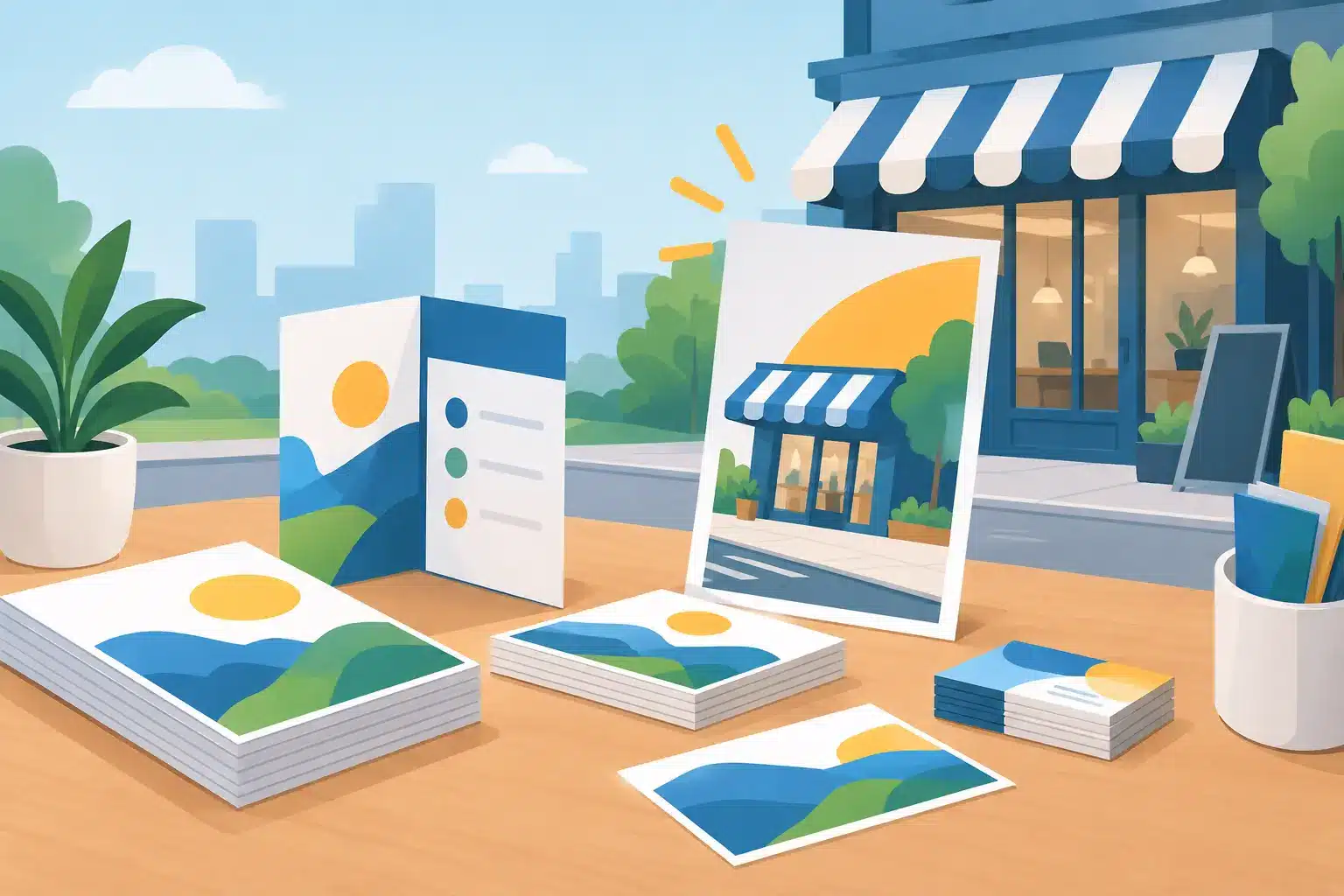
A great printed piece has a job to do. Maybe it needs to bring a new customer through your door, remind a regular about an upcoming event, or give someone a business card they can find weeks later in a wallet or desk drawer. This guide to print marketing is built for local businesses, organizations, and side hustles that want practical materials people will actually notice and use.
Print is not a replacement for social media, email, or a good website. It is the physical reminder that can stay on a counter, refrigerator, bulletin board, or passenger seat long after a post has disappeared from a feed. Done well, it gives your message a little more staying power.
Start With One Clear Goal
The quickest way to weaken a flyer, postcard, or brochure is to ask it to do everything at once. Before choosing paper, colors, or size, decide what you want the reader to do next. A restaurant might want to fill tables on a slow weeknight. A contractor may want estimate requests. A school group may need families to attend a fundraiser.
Give each piece one main action. That could be visiting your shop, calling for an appointment, bringing in a coupon, scanning a QR code, or saving the date. Supporting details matter, but they should not compete with the main message.
Try stating the goal in a simple sentence: “We want nearby families to know about our Saturday event and register by Friday.” That sentence makes the rest of your choices easier. You know the event name, date, time, location, price, and registration instructions need to be easy to find. Everything else is secondary.
Know Who Will Hold It
Print marketing works best when it respects the moment in which it is received. A business card handed over after a conversation needs clean contact information and a clear description of what you do. A door hanger needs a message that can be understood in seconds. A menu or service sheet may need more detail because customers will spend time with it.
Think about where the piece will land. A postcard mailed to local homes should quickly answer, “Why should I care?” A flyer at a community event may need a bolder headline because it is competing with many other notices. A rack card at a hotel, library, or visitor stop should make sense even when no one is there to explain it.
Local audiences also value useful details. Include your town or service area when it matters, along with hours, phone number, address, and any deadline that creates urgency. Do not make someone hunt for the basics.
Choose the Right Print Format
A smart guide to print marketing does not insist that every business needs the same materials. The best format depends on your goal, budget, audience, and how long the message needs to last.
Business cards are still one of the simplest ways to make a personal connection memorable. They work especially well for service providers, artists, small business owners, and anyone who meets customers face to face. Keep the design uncluttered. Your name, business name, what you offer, and the best way to reach you should be immediately clear.
Flyers are flexible, affordable, and useful for sales, openings, classes, local events, and community notices. They can be posted with permission, included in bags, displayed at checkout, or handed out directly. A flyer needs a strong headline, one appealing image or graphic, and enough white space that the important information does not get lost.
Postcards are a strong choice for neighborhood outreach. They feel personal without requiring an envelope, and they give you room for a special offer, seasonal reminder, or invitation. Mailing adds cost and planning, so postcards make the most sense when you have a focused local area or a customer list you are allowed to contact.
Brochures and folded handouts work when customers need time to compare services, understand options, or save information for later. Think of a home repair company’s service list, a nonprofit program overview, or a wedding vendor package guide. If the information could not be comfortably read in ten seconds, a folded format may be more useful than cramming it onto a flyer.
Signs, table tents, menus, and counter cards are often overlooked. Yet they reach people at the exact moment they are already in your space. Use them to point out add-ons, explain a promotion, direct visitors, or answer common questions before someone has to ask.
Write for a Quick Read
People do not read print materials in a straight line. They glance at the largest words, notice the image, look for the offer or event date, then decide whether to keep reading. Build your copy around that habit.
Lead with the benefit, not a long introduction. “Fresh pastries every Saturday morning” is stronger than “Our bakery is pleased to announce that we will be offering…” “Trade in your gently used books for store credit” tells readers exactly what they can do.
Use plain language, short sentences, and headings that carry meaning on their own. Avoid filling every open spot with text. White space is not wasted space. It gives the eye a place to rest and helps the offer stand out.
If you include a discount, make the terms easy to understand. State the expiration date, any minimum purchase, and whether the offer can be combined with other promotions. Clear details build trust. Fine print that feels sneaky does the opposite.
Make Design Choices That Help, Not Distract
A memorable design does not need to be flashy. It needs to be easy to recognize and easy to read. Use colors that fit your business and repeat them across your cards, flyers, signs, and social posts when possible. That repetition helps people connect the materials to you over time.
Choose readable type sizes, especially for contact information, dates, and calls to action. Decorative fonts can be fun in a headline, but they become tiring when used for every line. High contrast matters too: light gray type on a white background may look subtle on screen but disappear when printed.
Photos should be sharp, bright, and relevant. A clear photo of your food, products, team, or completed work is usually more persuasive than a generic stock image. For smaller pieces, one strong image often beats a crowded collage.
Before printing a large quantity, ask someone unfamiliar with the project to look at the design for five seconds. Can they tell what is being offered, who it is for, and what they should do next? If not, simplify it.
Paper and Quantity Are Strategic Decisions
Paper changes how a piece feels. A heavier cardstock can make a business card, gift certificate, or invitation feel more substantial. A lighter stock may be the practical choice for high-volume flyers, menus, or inserts. Glossy paper can make photographs and color pop, while matte paper is often easier to write on and can feel more understated.
Quantity deserves the same thought. Ordering a large run lowers the cost per piece, but only if the information will remain accurate. Do not print thousands of flyers with an event date, seasonal price, or phone number you may need to change next month. For time-sensitive promotions, smaller runs can prevent waste.
This is where local, face-to-face help can save frustration. At Liquid Books, customers can bring in a finished file or get assistance preparing print-ready materials for everyday business and community projects. A quick check before production can catch a blurry photo, tiny type, or missing margin before it becomes a stack of unusable paper.
Plan Distribution Before You Print
A box of beautiful postcards cannot market your business from a storage closet. Decide how each piece will get into the right hands before you place the order.
For local distribution, consider the places your customers already visit: community events, partner businesses, checkout counters, waiting rooms, campus boards, and neighborhood mailboxes where permitted. Ask before leaving materials, and bring a small, tidy display rather than a loose pile.
Match your quantity to the plan. If you will hand out flyers at two weekend events, estimate attendance and print enough for those conversations, plus a modest extra supply. If you are placing rack cards in several locations, check back regularly. Refill the spots that perform well and remove outdated materials promptly.
Give people a way to respond that you can track. A unique coupon code, a dedicated phone extension, a QR code leading to one specific page, or a simple question such as “Where did you hear about us?” can show whether the campaign is working. You do not need perfect data. You need enough feedback to make the next print run smarter.
Keep Print Part of the Conversation
The most effective print marketing feels connected to the rest of your customer experience. Use the same offer in your email, social posts, storefront signage, and printed handouts, but let each format do what it does best. A post can create quick awareness. A postcard can serve as a reminder. A counter card can prompt the final decision.
Fresh materials also signal that your business is active. Update seasonal promotions, replace worn displays, and retire old event flyers. When customers see clear, current information, they are more likely to trust that the service behind it is just as organized.
Your next printed piece does not need to be complicated. Start with one useful message, give it a clear home in the community, and make it easy for someone to take the next step. A good flyer or card is a small invitation – and the right one can lead to a real conversation.
 Previous Post
 Next Post