


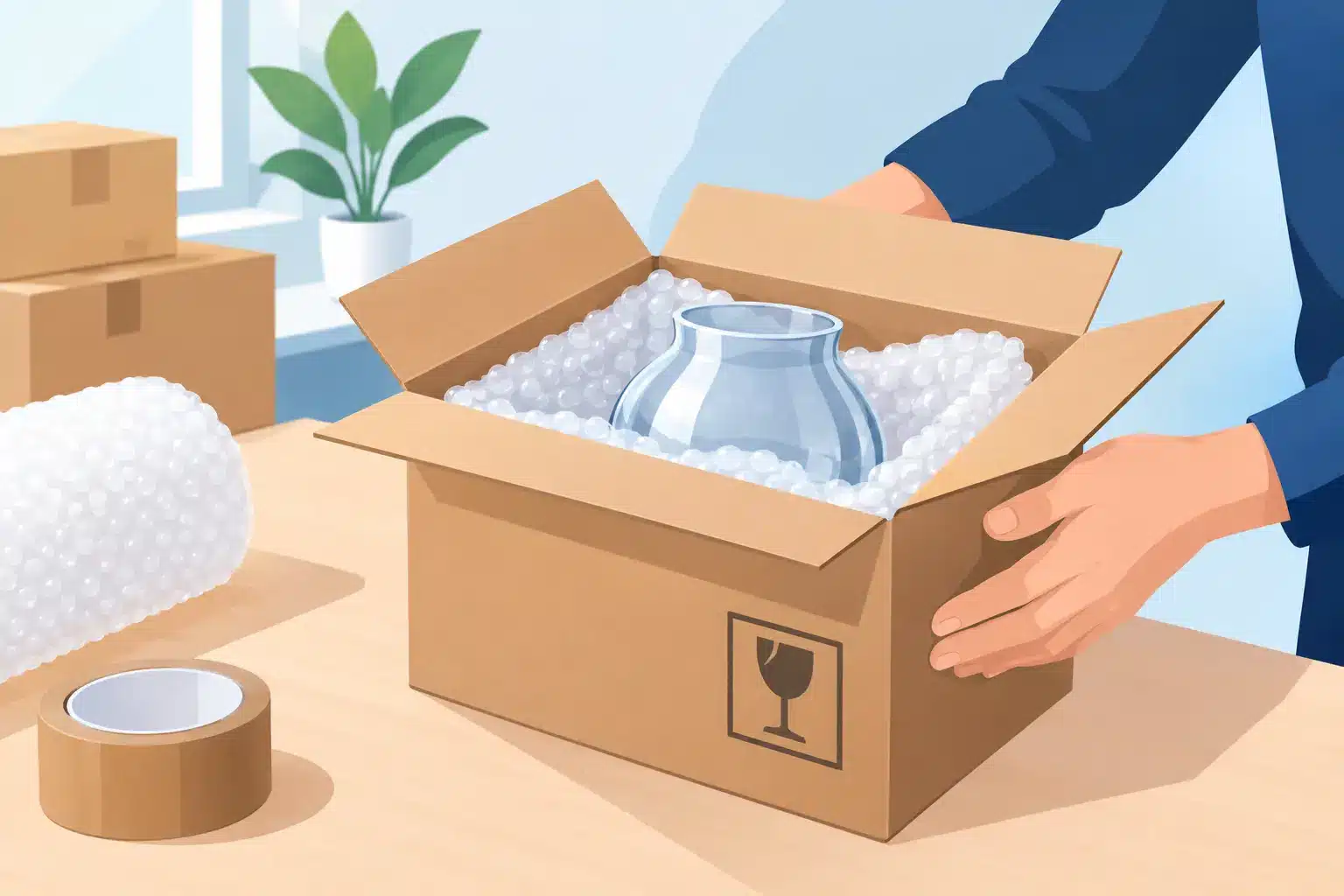
A chipped collectible, cracked photo frame, or bent record sleeve can turn a thoughtful shipment into a frustrating one. This fragile package shipping example shows how a little extra care at the packing table can protect the things people actually want to keep – whether you are mailing a gift, selling a vintage find, or sending a family keepsake across the country.
Start with the item, not the box
The best packing method depends on what is fragile and how it can be damaged. A ceramic mug needs cushioning on every side. A framed photo needs protection across its flat glass surface. A vinyl record may not be breakable like glass, but a weak mailer can leave it warped, corner-crushed, or split at the seam.
Before choosing a box, look at the item’s weak points. Handles, corners, lids, glass panels, and thin edges need the most attention. If an item already has a loose piece or delicate detail, secure it carefully before wrapping. Do not rely on a shipping label to make up for loose packing. Labels help, but the box has to do the real work.
Fragile package shipping example: packing a ceramic mug
Imagine you are shipping a ceramic coffee mug as a birthday gift. It has a handle, a glazed surface that can chip, and enough empty space inside to create problems if it is not packed correctly.
First, fill the mug’s interior with clean packing paper or bubble wrap. This gives the mug support from the inside and prevents the rim from taking all the pressure if the package is bumped. Wrap the mug in several layers of bubble wrap, paying special attention to the handle. Tape the wrap to itself, not directly to the mug.
Next, choose a sturdy box that leaves about two inches of space around the wrapped mug. Place a layer of crumpled packing paper or cushioning material on the bottom. Set the mug in the center, then fill every open area around it. The goal is simple: the mug should not shift when the box is gently moved.
Close the box and give it a light shake. If you hear or feel movement, add more cushioning. This quick test catches one of the most common packing mistakes: using a box that is technically closed but still has room for the item to slide around.
For an especially valuable mug, such as a handmade piece or sentimental collectible, use double-boxing. Pack the mug securely in a smaller box, then place that box inside a larger box with cushioning on all sides. It uses more material and adds a little size and weight, but it offers much better protection during a long trip.
Why “fragile” is not a packing plan
Writing “Fragile” on a package can be useful, especially when it is clearly marked on more than one side. Still, it should be treated as a reminder, not a substitute for good materials. Packages move through loading areas, vehicles, sorting equipment, and delivery routes. Even careful handling cannot protect an item that is loose in an oversized box.
A dependable package has three layers of defense: wrapping that protects the item itself, cushioning that keeps it from moving, and a strong outer box that holds its shape. Skip one of those layers and the risk goes up quickly.
This is also why reused boxes deserve a close look. Reuse is a great choice when the box is clean, dry, and structurally sound. If it has crushed corners, deep creases, softened cardboard, or old labels that could cause confusion, start with a fresh box instead. Saving a box is not a bargain if it fails halfway to its destination.
Match materials to the shipment
Bubble wrap is useful, but it is not the only answer. Packing paper is excellent for filling empty space and wrapping many sturdy items. Foam sheets can help protect polished surfaces. Corrugated inserts can support flat items such as framed art or records. Air pillows are light and convenient, though they are best used around an item rather than as its only protection.
For books, DVDs, CDs, and video games, moisture and bent corners are often bigger concerns than breakage. A snug mailer or small box, a protective sleeve or bag when appropriate, and firm cardboard support can make a big difference. Collectors notice details, and so do recipients opening a gift.
Glass, ceramics, and electronics call for more padding and a box with enough room for that padding to do its job. Heavy items need an especially sturdy box. If a heavy object can move even slightly, it can wear through cardboard or damage itself during transit.
Avoid the shortcuts that cause damage
Many broken shipments come down to a few avoidable choices. Wrapping an item in a thin layer of paper and placing it in a large box leaves too much open space. Using newspaper directly against a light-colored or unsealed item can transfer ink. Mailing two hard objects together without separating them can cause both to crack or scratch.
Tape matters, too. Use shipping tape made for closing boxes, and seal the center seam plus both edge seams. Masking tape, painter’s tape, or a short strip of household tape may hold for a few minutes, but they are not built for the weight and handling of a shipment.
If you are sending several fragile items in one box, wrap each one individually. Create a cushion between them, and make sure nothing can touch. Think of each item as needing its own small safety zone inside the larger package.
Check the address and the service before it leaves
Careful packing deserves a careful label. Use a complete delivery address, including apartment or suite numbers where needed, and add a return address in case the carrier cannot complete delivery. Place the label on the largest flat side of the box, not over a seam or corner.
The shipping service you choose depends on the item’s value, destination, size, and delivery deadline. A low-cost option may be fine for a well-protected everyday item, while a higher-value collectible may call for tracking, declared value coverage, signature confirmation, or another added service. There is no one best choice for every shipment, but knowing what the item is worth to you helps you make a practical decision.
It is also worth measuring and weighing the finished package, not just the item. Extra cushioning and double-boxing can change the shipping cost. That trade-off is usually easier to accept before the package is sealed than after a surprise at the counter.
Get local help for the tricky packages
Some items are easy to pack at home. Others deserve a second set of eyes. A framed family photo, a delicate collectible, a gift you cannot replace, or an awkwardly shaped item can be stressful to ship when you are guessing at box size and materials.
At Liquid Books in Manteno, you can bring in the item and get practical help preparing it for shipment. That is especially helpful when you are balancing protection, package size, and cost – or when you would rather spend your afternoon browsing for hidden gems than hunting through a closet for a box that might work.
The next time you are sending something breakable, pause for the shake test before you hand it over. If nothing moves, the box is strong, and the address is clear, your package has a much better chance of arriving ready to be enjoyed.
 Previous Post