


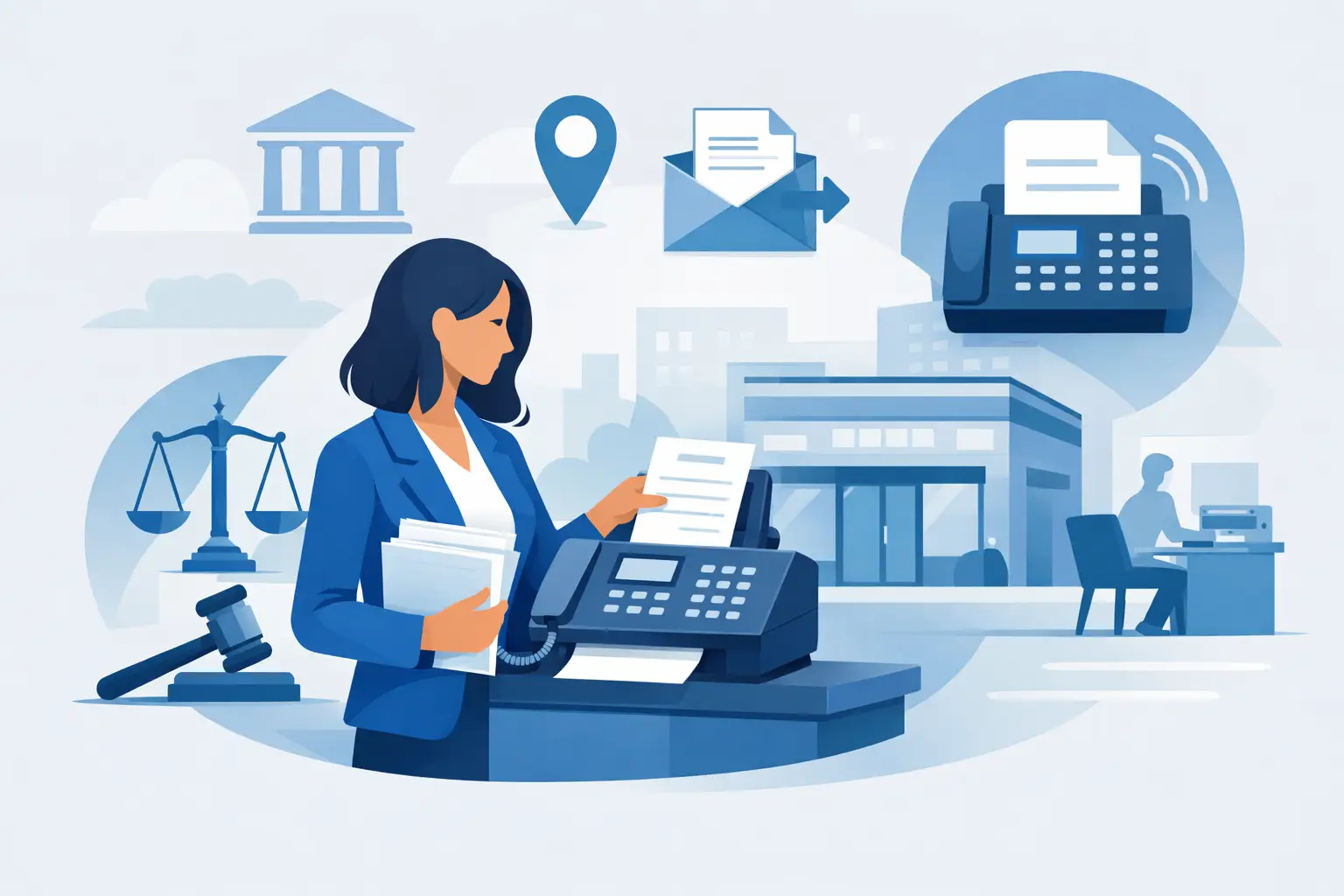
A court deadline, a custody form, or a signed agreement can turn a simple question into an urgent one: where to fax legal documents without risking a missing page or a privacy problem. Faxing is still used by law offices, government agencies, insurance companies, and some courts because it creates a time-stamped transmission record. The key is choosing a reliable place and taking a few careful steps before you send.
Where to Fax Legal Documents Locally
For most people, a local print and fax service is the easiest choice. A staffed counter gives you access to a working machine, a person who can help confirm the number, and a printed transmission receipt for your file. This is especially useful when your documents include several pages, need to be sent quickly, or are too sensitive to handle on an open public machine.
In Manteno and nearby Kankakee County communities, neighborhood service centers can be a practical stop when you need to fax forms and take care of other errands. Liquid Books offers fax services along with printing, shipping, and other everyday document help, so you can get your pages organized and sent without making a special trip across town.
Office supply stores and shipping centers may also offer public faxing. Their availability, pricing, and staffing can vary, so call before heading over if your deadline is close. Some locations charge per page, while others have separate rates for local, long-distance, or international faxes.
Public libraries sometimes provide fax service as well. This can be a budget-friendly option, but it may come with limited hours, staff availability, page limits, or a shared machine near other patrons. If you are sending documents with Social Security numbers, financial information, medical information, or family-court details, a staffed private service counter is often the more comfortable choice.
Courthouses, law offices, and government buildings should not be assumed to provide outgoing public fax service. A clerk may accept documents by fax only under specific rules, and an attorney’s office generally cannot send paperwork for someone who is not a client. Always ask first rather than arriving with a deadline and no backup plan.
First, Confirm That Fax Is Accepted
Before paying to send anything, contact the recipient and verify the fax number. Ask whether faxed copies are accepted for your specific purpose and whether they need a cover sheet, case number, attention line, or other identifying information.
This matters most for court filings. Courts may use electronic filing systems, require original signed documents, limit fax filing to certain case types, or set strict page and timing rules. A fax sent at 4:59 p.m. might still not count as filed if the court’s rules require filing through a different system or if a clerk must process it before closing. The same caution applies to legal aid organizations, county offices, and opposing counsel.
If a form requires an original signature, notarization, or a physical copy, faxing may only send a temporary copy. You may still need to mail, deliver, or electronically submit the original. The recipient can tell you what they need, but for questions about filing requirements or legal strategy, consult an attorney or the court clerk. A fax provider can help transmit your pages, but cannot give legal advice.
Prepare Your Documents Before You Go
Legal paperwork is easier to send when it is ready before you reach the counter. Put the documents in the exact order the recipient expects, including attachments and exhibits. Remove staples, paper clips, sticky notes, and folded corners so pages can feed cleanly through the machine.
Check every page for legibility. Light pencil marks, blurry copies, small handwriting, and dark shadows can become harder to read after transmission. If you have a multi-page packet, number the pages if they are not already numbered. That makes it easier for the recipient to notice if a page is missing.
A cover sheet is a smart addition for most legal faxes. Include your name, phone number, the recipient’s name or department, the fax number, the date, the total number of pages including the cover sheet, and a short description of what is enclosed. For court-related documents, include the case number exactly as it appears in the case record.
Keep the message on the cover sheet simple. Do not write a detailed account of your case, personal conflict, medical situation, or financial history. The fax itself is a delivery method, not the place to explain more than the recipient needs to identify the paperwork.
Protect Private Information at the Fax Counter
Legal documents can contain more personal information than people realize. Before sending, look for full Social Security numbers, bank account numbers, credit card details, birth dates, driver’s license numbers, or information about children. If the recipient does not require that information, consider whether it should be redacted. Do not redact anything that must remain visible for a court or agency filing without first confirming the rules.
At a public or shared fax machine, stay with your papers from start to finish. Do not leave the originals in the feeder while you browse, shop, or step outside. After the fax finishes, check the scanner bed, feeder tray, and output area for pages that may have been left behind.
It is also wise to verify the destination number aloud with the staff member before the pages go through. One wrong digit can send a private filing to a stranger. If the recipient has a confirmation contact, call or email them afterward to make sure the complete packet arrived.
Get Proof That Your Fax Was Sent
A transmission receipt is one of the biggest reasons to use a professional fax service rather than hoping an old home machine works. Ask for a printed confirmation showing the date, time, destination number, page count, and successful transmission status. Keep it with a copy of the documents you sent.
A successful transmission report generally shows that the receiving fax machine answered and received the pages. It does not always prove that the right person reviewed them, that the filing was accepted, or that the documents met a court’s rules. For time-sensitive matters, follow up with the receiving office and write down the name of the person who confirms receipt.
If the fax fails, do not panic, but do act quickly. Check the number, ask whether the recipient’s line is busy or out of service, and try again if appropriate. If the deadline is close, ask the recipient whether email, e-filing, hand delivery, or another method is allowed. Save any failed transmission reports as well, particularly if timing could become an issue.
When Online Faxing Makes Sense
Online fax services can be useful when your documents are already saved as PDFs and you need to send them outside local business hours. They can be convenient for non-urgent paperwork, but they are not always the best option for legal documents. You need a secure account, a clear understanding of where files are stored, and confidence that you are using the correct recipient number.
They also do not solve every filing requirement. If a court requires e-filing through its own portal, an online fax is still just a fax. If your paperwork needs original signatures or notarization, digital transmission may be only one part of the process.
For a packet you can physically review page by page, local fax service offers a reassuring advantage: you can watch the documents go through, receive a paper receipt, and leave with your originals in hand. Bring an extra copy, confirm the number before the first page feeds, and keep your transmission report somewhere you can find when it matters.
 Previous Post
 Next Post